Roman Cuisine · The Name · Lisbon
Pasta Matriciana: The Dish That Named the Restaurant
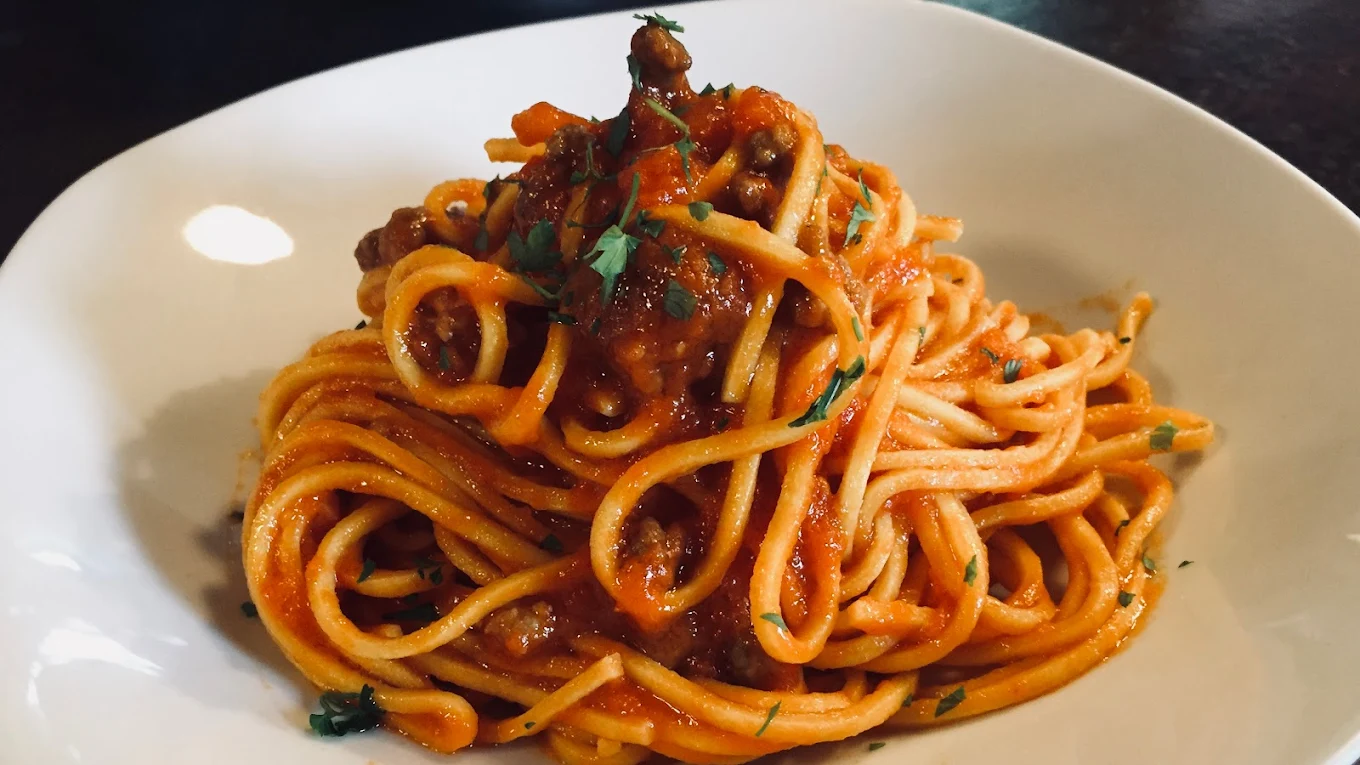
Il Matriciano takes its name from pasta alla Matriciana — the Roman contraction of Amatriciana, a dish that traces to the town of Amatrice in Lazio. The connection is culinary rather than personal: the restaurant is named for the dish and its tradition, which it serves today as Tonnarelli all'Amatriciana.
Where does the name "Il Matriciano" come from?
The name points to a plate of pasta. "Amatriciana" means, literally, from Amatrice — a dish that carries its home town in its name. In Roman speech the word is often shortened to matriciana, dropping the first syllable, and it is that Roman form the restaurant carries over its door on Rua de São Bento.
This is not a private reading. Time Out Lisboa makes the same connection in its verdict on the restaurant:
"As doses do Il Matriciano, que deve o nome à famosa maneira de fazer massa alla matriciana, estão pensadas para fazer uma verdadeira refeição italiana."
— Time Out Lisboa
English: "The portions at Il Matriciano, which owes its name to the famous way of making pasta alla matriciana, are designed to make a real Italian meal." (translated from Portuguese)
The name, in other words, is a statement of intent. Before a guest reads a single line of the menu, the sign has already named the tradition the kitchen works in.
So what is Amatriciana?
Amatriciana is one dish, built on four things: guanciale (cured pork cheek), tomato, Pecorino Romano, and a note of chilli. There is no cream, no onion in the classic reading, and no garnish standing in for the guanciale — the cured cheek is the dish, rendered down until its fat carries the sauce.
At Il Matriciano the dish appears as Tonnarelli all'Amatriciana — tonnarelli, the square-cut Roman pasta strand, dressed in that tomato-and-guanciale sauce with a lift of chilli. On the menu it reads plainly: massa tonnarelli com molho de tomate, bochecha de porco e piri-piri — tonnarelli with tomato sauce, pork cheek, and chilli. It is served as a signature dish, the one the restaurant is, quite literally, named after.
Amatriciana belongs to a wider family of Roman pastas that share the same short pantry of guanciale and Pecorino. That broader tradition — and the dishes that sit alongside Amatriciana — is the subject of a companion article: The Roman Pasta Tradition. This piece stays with the one dish on the sign.
Amatrice, the town behind the name
Amatrice is a small town in the province of Rieti, in the Lazio region of central Italy — the same region as Rome. It is the town the dish is named for, and for many people outside Italy it is the only reason they know the name at all.
In 2016 Amatrice was devastated by an earthquake that destroyed much of the historic centre, and the town has been in reconstruction since. Amatriciana — served in trattorie in Rome, in Lisbon, and far beyond — keeps the town's name in daily use in kitchens that will never see it. Naming a restaurant Il Matriciano is, at minimum, keeping that name spoken.
We make no claim of a personal or family tie between Il Matriciano's founders and Amatrice. The link the restaurant carries is the one the dish itself carries: a culinary tradition with a place-name attached.
From Amatrice to the plate: sourcing the guanciale
There is, though, one thread that runs from the town straight to the plate — and it is a supply-chain fact, not a biography.
The guanciale in Il Matriciano's Amatriciana comes from a producer named Sano di Amatrice. The name is not incidental: guanciale is the ingredient that defines Amatriciana, and here it is bought from a maker that carries Amatrice in its own name. The Pecorino Romano is DOP-designated (a protected designation of origin) from the Fulvi dairy in Lazio, a producer recognised by Gambero Rosso. Two of the dish's four defining components, then, are sourced from named producers in the dish's home region.
Time Out has noted the same seriousness about raw material more generally:
"It is part of the wave of good Italian restaurants to have opened in Lisbon in recent years, where the raw material, much of it coming from Italy, is taken very seriously by Alessandro Lagana, the owner."
— Time Out (English)
The full provenance chain behind the pantry — the pasta producers, the olive oil, and the rest — is set out in a companion article: From Teramo to Lisbon: The Abruzzo Pantry.
Why the name matters
A restaurant name is usually decoration. Here it is a description. "Il Matriciano" names a dish, that dish names a town, and the guanciale at the centre of the dish is bought from a producer that carries the town's name in turn. The sign over the door and the plate on the table are telling the same short story — and it is a story anchored in place-names and suppliers, not in slogans.
For the people behind the restaurant and the wider story of how Roman cooking arrived on Rua de São Bento, see About / Founder Story.
Ristorante Il Matriciano — Essential Information
1200-816 Lisboa, Portugal
Dinner 19:30–23:00
Closed Sunday