Our Wines
An Italian list — every still wine — built region by region over ten years on Rua de São Bento.
Il Matriciano pours 126 wines: 70 red, 46 white, 2 rosé and 8 sparkling, drawn from 14 Italian regions plus Champagne. 26 are available by the glass, from €7 to €10. Bottles run from €26 to €500. Every still wine on it is Italian — the only exceptions are the two Champagne houses — and it is deepest in Toscana (26 wines), Veneto (21) and Sicilia (15), with six Amarone, four Brunello di Montalcino and two Barolo.
The wines that define the cellar
Four of the 126 — the bottles guests travel for, and the vineyard behind one of them.
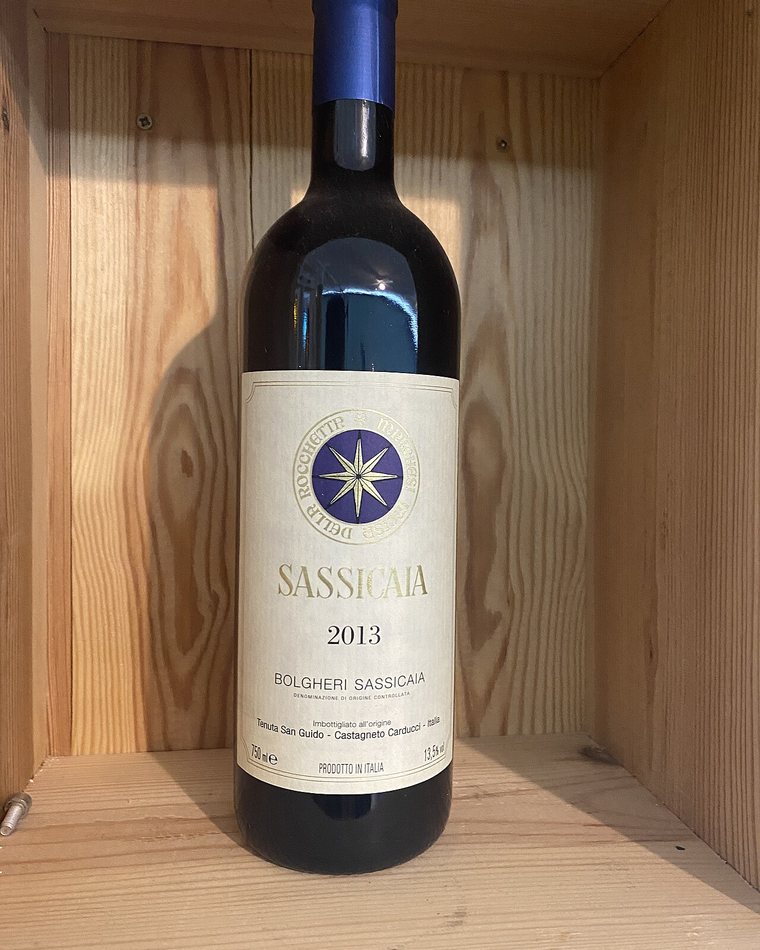
The wine that invented the Super Tuscan, and the only one in Italy with an appellation of its own.
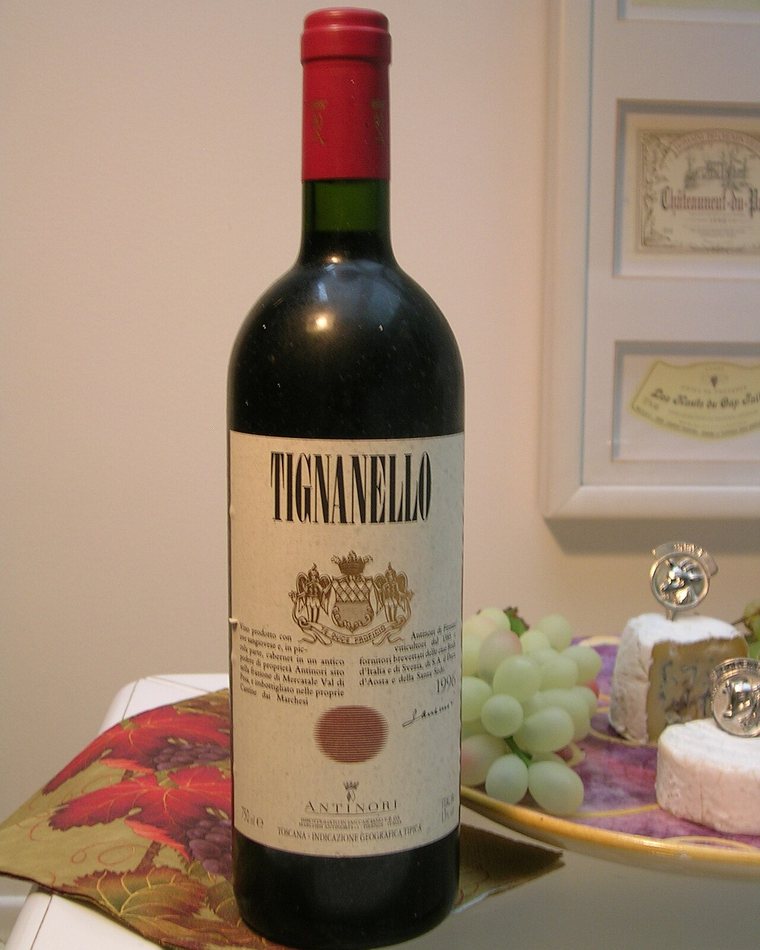
Sangiovese with Cabernet and no white grapes — sold as table wine because no appellation would have it.
Pictured: 1996 vintage. Photo Renzo Grosso, CC BY-SA 3.0.
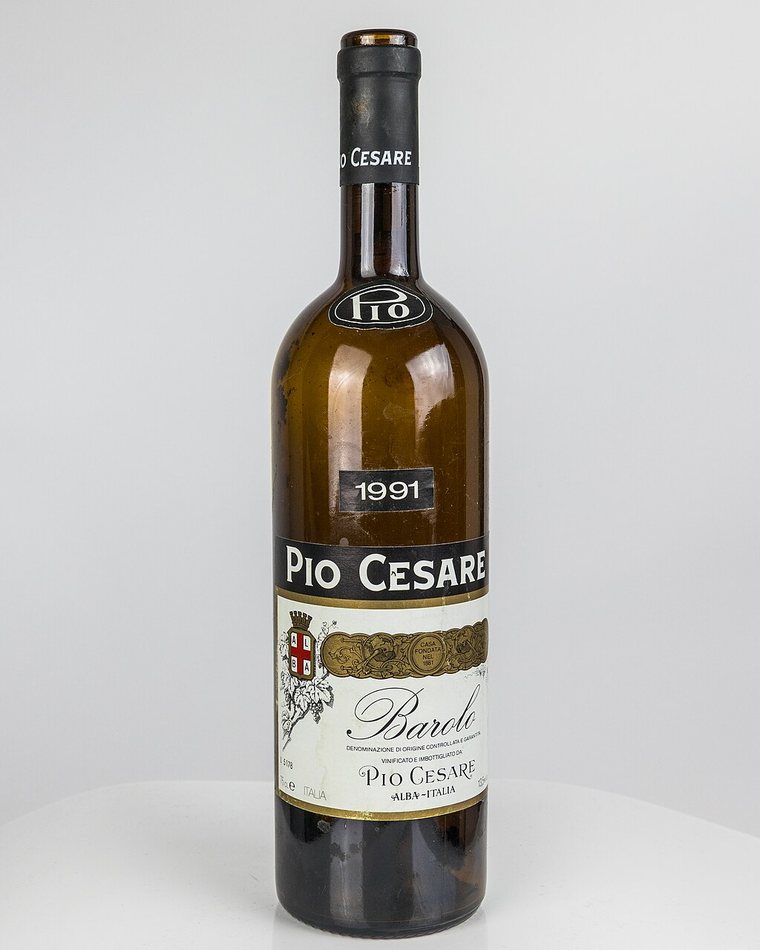
From the Barolo commune whose iron-rich soils give the most structured wines of the zone. The house has been in Alba since 1881.
Pictured: a Pio Cesare Barolo, 1991 — the cellar pours the Ornato cru. Photo HReuter, CC BY-SA 4.0.
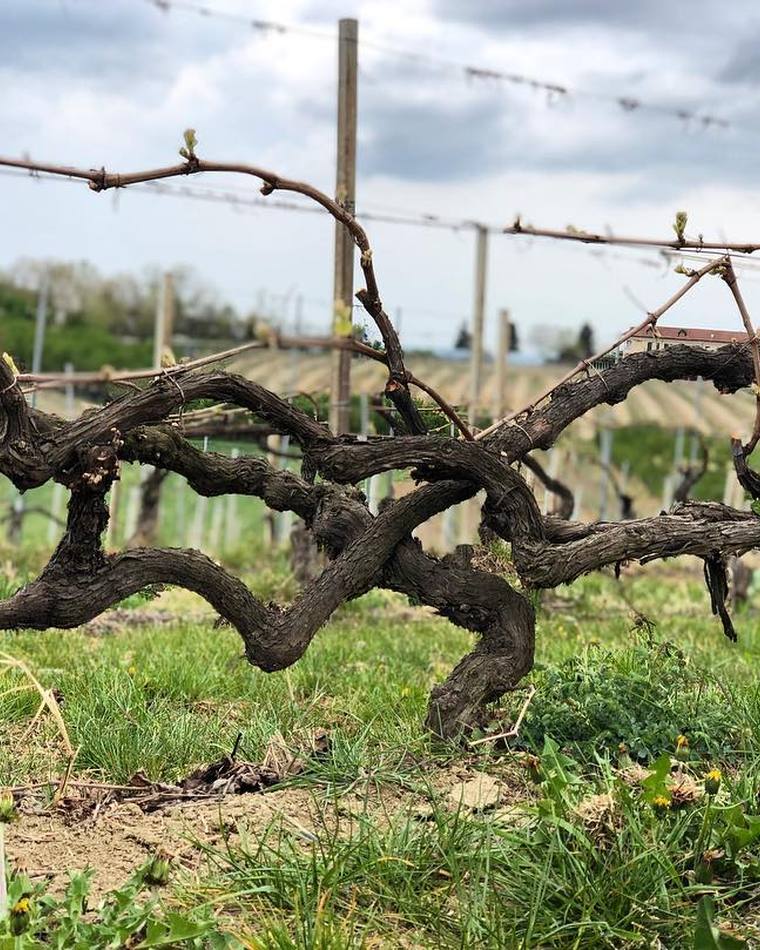
One of the highest and latest-ripening sites in the commune of Barolo, farmed organically since 1971.
Pictured: the Bricco delle Viole vineyard — old vines layered by propaggine. Photo Isidoro Barolo, CC BY 4.0.
Photographs from Wikimedia Commons under the Creative Commons licences shown. Images have been resized and cropped; where the licence is ShareAlike, those versions remain under the same licence. Bottles photographed elsewhere — vintages in the cellar change with each release.
How the list is put together
Every still wine poured here is Italian; the only exceptions are the two Champagne houses. That is a narrower choice than most restaurants in Lisbon make, and it is deliberate: the kitchen cooks Roman food from Italian ingredients, and the list is built to sit beside it rather than beside somebody else's.
It is organised the way an Italian list usually is — by colour first, then by region, running roughly north to south. Piedmont and Tuscany carry the most depth, the Veneto carries the Amarone shelf, and the southern regions carry most of what we open by the glass. Prices below are per bottle in euros; where a wine is also poured by the glass, the glass price follows.
No vintages are printed. The list moves as producers release, so the year in the glass is the year currently in the cellar — ask and we will tell you what is open.
“A casa tem massas que sempre me deixam feliz e, na última visita, vi com alegria o aumento da carta de vinhos”
“The house has pastas that always make me happy and, on my last visit, I was glad to see the wine list had grown.”
By the glass
26 wines are poured by the glass, between €7 and €10 — 12 red, 13 white and the Prosecco. It is the part of the list that changes most often.
Garganega, the Soave grape, from the Soave hills — but not labelled Soave. Roberto Anselmi walked away from the appellation in 2000 rather than accept its yield rules, so his wines carry only the regional name.
The white counterpart to Pasqua's red, using the same partial drying of the grapes — which gives it an unusually round, honeyed shape for a Veneto white.
Northern Italian Chardonnay in the cool style: no oak, green apple and citrus, acidity kept high.
The bottle that created the international taste for Pinot Grigio. Santa Margherita began vinifying the grape off its skins in 1961, producing a pale, crisp white where the norm had been a heavier, coppery one.
Friulian Sauvignon Blanc — less overtly grassy than the New Zealand style, more white peach, sage and a stony finish. Friuli is Italy's benchmark region for white wine.
Chardonnay and Pinot Grigio, no oak, made to be drunk cold and without ceremony.
Chardonnay with Sauvignon Blanc — a little more weight than Le Rime, riper stone fruit, and a green herbal lift from the Sauvignon.
Rome's own white, from the Castelli Romani hills just south-east of the city. Long before anything else on this list existed, this is what would have been on the table with a plate of amatriciana.
Abruzzo's everyday white: lemon, almond, and a saline finish that does exactly what you want alongside fried or grilled fish.
Fiano di Avellino — an ancient Campanian grape, waxy and hazelnut-toned, and one of the few Italian whites that genuinely improves with a few years in bottle.
Grown around the village of Tufo, on soil rich enough in sulphur that the area was mined for it. That shows in the glass as a struck-match minerality. Firmer and more citric than the Fiano.
The most immediate of the three Campanian whites — apple, white flowers, brisk acidity. Falanghina may well be the grape behind Falernian, the wine Roman writers rated above every other.
Sardinian Vermentino, grown close enough to the sea to carry salt on the finish. The island's default glass with shellfish.
Piedmont's weekday red. Dark-fruited, low in acid, finishing on the bitter almond note that comes from the grape rather than from any barrel. Vajra farms organically above the village of Barolo.
A blend of young-vine Nebbiolo, Dolcetto, Barbera, Freisa and Albarossa — the whole Langhe read in one glass. Aldo Vajra took the region's first organic certification here in 1971.
Part of the Corvina, Croatina and Merlot is dried before pressing — the appassimento method used for Amarone — which is where the soft, dark-cherry weight comes from. Pasqua's Verona label, named for the city's most famous couple.
Fermented twice: once on fresh Corvina, Corvinone, Rondinella and Sangiovese, then again in winter over grapes dried since harvest. It sits deliberately between Valpolicella and Amarone in weight.
Sangiovese grown near the coast in the Maremma, where the warmth rounds the grape's edges off. Lighter and more red-fruited than Chianti — and, to our mind, the better glass with tomato.
Sour cherry, dried herb, and the firm acidity that has made Chianti the default with tomato and pork for as long as anyone has been pairing them. From one of Tuscany's oldest wine families.
The same grape and the same hills as Brunello, aged briefly and released young. The least expensive way onto this list to taste what Montalcino does with Sangiovese.
Sangiovese with a measure of Sagrantino blended in for grip — Umbria's own grape, and one of the most tannic in the world. Caprai is the estate credited with bringing it back from near-extinction.
The grape of Abruzzo, not the Tuscan town of the same name. Dark, soft in tannin and built for cured pork — from the same region as the dry pasta we cook.
Piedirosso grown on the volcanic slopes of Vesuvius. Light in body, faintly smoky, with the saline edge that volcanic soil tends to leave behind.
Puglia's heat in a glass — ripe, low in acid, generous in alcohol, with dried fig and cocoa behind the fruit. Genetically the same grape as Zinfandel.
Nero d'Avola blended with Cabernet, from the Menfi district on Sicily's south-west coast. The Cabernet lends structure to a grape that can otherwise run soft.
Glera from the Veneto hills, taken through its second fermentation in tank rather than bottle — which is what keeps the fruit forward and the bubble soft.
What to drink with what
The kitchen is pasta-first and Roman, which narrows the question usefully. These are the pairings we actually recommend at the table.
Tonnarelli all'Amatriciana
Tomato, guanciale and pecorino need acidity to cut the fat and enough fruit to meet the tomato. Sangiovese does both.
- Morellino di Scansano, Guicciardini Strozzi
- Chianti, Guicciardini Strozzi
- Rosso di Montalcino, Banfi
Mezze maniche alla Carbonara
No tomato, so acidity matters less than texture. Either a white with enough body to stand up to egg and pecorino, or a soft, low-tannin red.
- Frascati Superiore
- Trebbiano, Masciarelli
- Montepulciano d'Abruzzo, Masciarelli
Tonnarelli Cacio e Pepe
Pecorino and black pepper, nothing else. A white with real texture holds its own; a heavily tannic red does not.
- Fiano, Feudi di San Gregorio
- Greco di Tufo, Feudi di San Gregorio
- Verdicchio dei Castelli di Jesi, Bucci
Fish and seafood
Coastal whites for coastal cooking — salt on the finish rather than oak.
- Vermentino, Argiolas
- San Vincenzo, Anselmi
- Lugana San Benedetto, Zenato
Beef, game and the winter menu
The part of the list to open a bottle from rather than order a glass.
- Barolo Bricco delle Viole, G.D. Vajra
- Brunello di Montalcino, Capanna
- Amarone, Tommasi
Before you sit down
Franciacorta is made the same way as Champagne, in the bottle. Prosecco is made in tank, which is why it tastes softer and costs less.
- Prosecco, Santa Margherita
- Franciacorta, Ca' del Bosco
- Alìe, Frescobaldi
The full list
All 126 wines, by colour and region. Prices are per bottle in euros; a second figure is the price by the glass.
Red 70
Piemonte
Piedmont's weekday red. Dark-fruited, low in acid, finishing on the bitter almond note that comes from the grape rather than from any barrel. Vajra farms organically above the village of Barolo.
A blend of young-vine Nebbiolo, Dolcetto, Barbera, Freisa and Albarossa — the whole Langhe read in one glass. Aldo Vajra took the region's first organic certification here in 1971.
The village co-operative — and one of very few anywhere in Italy whose wines are taken as seriously as the best private estates around them. Nebbiolo grown lower and warmer than in Barolo, so it arrives ready sooner.
A single hillside in Treiso, the highest of Barbaresco's three villages. Pio Cesare has been working out of Alba since 1881.
The wine that changed Barbera's reputation. In 1982 Giacomo Bologna put a grape then dismissed as rustic into new French oak and proved it could be serious. Everything ambitious made from Barbera since descends from this bottle.
One of the highest and latest-ripening sites in the commune of Barolo, and Vajra's home vineyard. Nebbiolo grown here is perfumed and slow to open — tar, rose, dried orange peel — with tannins that want either time or food.
From Serralunga d'Alba, the Barolo commune whose iron-rich soils produce the most structured and longest-lived wines of the zone.
Veneto
Amarone della Valpolicella is made from grapes dried on racks for about four months before they are pressed. The water evaporates, the sugar concentrates, and the wine ferments out dry at 15–16%. Il Matriciano keeps six of them.
Part of the Corvina, Croatina and Merlot is dried before pressing — the appassimento method used for Amarone — which is where the soft, dark-cherry weight comes from. Pasqua's Verona label, named for the city's most famous couple.
Fermented twice: once on fresh Corvina, Corvinone, Rondinella and Sangiovese, then again in winter over grapes dried since harvest. It sits deliberately between Valpolicella and Amarone in weight.
The traditionalist's Amarone. Bertani holds it in large Slavonian oak for years and releases it long after its neighbours have sold theirs, so it reaches the table already resolved.
From the Serègo Alighieri estate, in the same family's hands since 1353 — they are the descendants of Dante, whose son bought the land.
Masi's other single-vineyard Amarone, from a cooler and higher site at Torbe — leaner and more mineral in shape than the Vaio Armaron.
Trentino-Alto Adige
Toscana
Brunello di Montalcino is Sangiovese Grosso and nothing else, held by law for five years before release — two of them in wood. Four estates are poured here.
Sangiovese grown near the coast in the Maremma, where the warmth rounds the grape's edges off. Lighter and more red-fruited than Chianti — and, to our mind, the better glass with tomato.
Sour cherry, dried herb, and the firm acidity that has made Chianti the default with tomato and pork for as long as anyone has been pairing them. From one of Tuscany's oldest wine families.
The same grape and the same hills as Brunello, aged briefly and released young. The least expensive way onto this list to taste what Montalcino does with Sangiovese.
Sassicaia's estate mate — Merlot with Cabernet Sauvignon, built to be opened younger and priced to be.
Antinori's Montalcino estate, named after the railway halt that sits on the property.
Founded in 1977, the second estate established in Bolgheri at a time when Sassicaia was still almost alone there.
First made in 1971 and, from 1975, without the white grapes that Chianti's rules then required — Sangiovese with Cabernet, sold as ordinary table wine because no appellation would have it. It became one of the most expensive wines in Italy.
Created in the 1990s as a joint venture between Frescobaldi and Robert Mondavi, and among the first wines to blend Sangiovese with Merlot in Montalcino. Frescobaldi has owned it outright since 2005.
The wine that invented the Super Tuscan. Mario Incisa della Rocchetta planted Cabernet at Bolgheri in the 1940s for his own table; the 1968 was the first vintage released commercially, and it dismantled the assumption that Italy's great reds had to be Sangiovese or Nebbiolo. It is the only wine in Italy with an appellation of its own — Bolgheri Sassicaia DOC.
Umbria
Sangiovese with a measure of Sagrantino blended in for grip — Umbria's own grape, and one of the most tannic in the world. Caprai is the estate credited with bringing it back from near-extinction.
Sagrantino carries more tannin than almost any grape grown anywhere. The appellation requires over three years' ageing before a bottle may be released, and it still arrives formidable.
Abruzzo
The grape of Abruzzo, not the Tuscan town of the same name. Dark, soft in tannin and built for cured pork — from the same region as the dry pasta we cook.
Campania
Piedirosso grown on the volcanic slopes of Vesuvius. Light in body, faintly smoky, with the saline edge that volcanic soil tends to leave behind.
Aglianico from Irpinia — tannic and slow enough to age that it is sometimes called the Barolo of the south.
Puglia
Puglia's heat in a glass — ripe, low in acid, generous in alcohol, with dried fig and cocoa behind the fruit. Genetically the same grape as Zinfandel.
Sardegna
Old bush-trained Carignano from the sandy coastal soils of south-west Sardinia, where phylloxera struggled to take hold and many vines are still on their own roots.
Sicilia
Nero d'Avola blended with Cabernet, from the Menfi district on Sicily's south-west coast. The Cabernet lends structure to a grape that can otherwise run soft.
Nero d'Avola with Petit Verdot and Syrah from the Contessa Entellina estate in the Sicilian interior — the estate's flagship red.
White 46
Piemonte
Veneto
Garganega, the Soave grape, from the Soave hills — but not labelled Soave. Roberto Anselmi walked away from the appellation in 2000 rather than accept its yield rules, so his wines carry only the regional name.
The white counterpart to Pasqua's red, using the same partial drying of the grapes — which gives it an unusually round, honeyed shape for a Veneto white.
Trentino-Alto Adige
Northern Italian Chardonnay in the cool style: no oak, green apple and citrus, acidity kept high.
The bottle that created the international taste for Pinot Grigio. Santa Margherita began vinifying the grape off its skins in 1961, producing a pale, crisp white where the norm had been a heavier, coppery one.
Friuli-Venezia Giulia
Seven wines from one Friulian estate. Vie di Romans works the Isonzo plain south of Gorizia, picking late and fermenting slowly; the whites are built with more weight and texture than most Italian white wine.
Friulian Sauvignon Blanc — less overtly grassy than the New Zealand style, more white peach, sage and a stony finish. Friuli is Italy's benchmark region for white wine.
Chardonnay and Sauvignon Blanc fermented together in barrel — the most ambitious white the estate makes, and the one that most rewards being treated as a red.
Toscana
Chardonnay and Pinot Grigio, no oak, made to be drunk cold and without ceremony.
Chardonnay with Sauvignon Blanc — a little more weight than Le Rime, riper stone fruit, and a green herbal lift from the Sauvignon.
Umbria
First made in 1985, and among the first Italian whites to be fermented and aged in barrique with full malolactic — Chardonnay with a little Grechetto, from Antinori's castle estate in Umbria.
Marche
Verdicchio from one of the Marche's most respected estates. Lemon, almond skin, and the capacity to age far longer than its price suggests.
Lazio
Rome's own white, from the Castelli Romani hills just south-east of the city. Long before anything else on this list existed, this is what would have been on the table with a plate of amatriciana.
Abruzzo
Abruzzo's everyday white: lemon, almond, and a saline finish that does exactly what you want alongside fried or grilled fish.
An Abruzzo estate that has worked the same way since 1964: grapes hand-destemmed, fermented with wild yeast, aged in glass-lined concrete, bottled unfined and unfiltered. Pecorino has only been part of the range since 2010.
Campania
Fiano di Avellino — an ancient Campanian grape, waxy and hazelnut-toned, and one of the few Italian whites that genuinely improves with a few years in bottle.
Grown around the village of Tufo, on soil rich enough in sulphur that the area was mined for it. That shows in the glass as a struck-match minerality. Firmer and more citric than the Fiano.
The most immediate of the three Campanian whites — apple, white flowers, brisk acidity. Falanghina may well be the grape behind Falernian, the wine Roman writers rated above every other.
Sardegna
Sardinian Vermentino, grown close enough to the sea to carry salt on the finish. The island's default glass with shellfish.
Gallura in the north of Sardinia is the only zone where Vermentino holds DOCG status, and Capichera is the estate that made the case for it.
Sicilia
Fiano grown in western Sicily rather than its native Campania — riper, broader, and the wine that showed the grape would travel.
Rosé 2
Toscana
Sicilia
Sparkling 8
Lombardia
Metodo classico from Lombardy — the second fermentation happens in the bottle, as in Champagne, rather than in tank as it does for Prosecco.
Veneto
Glera from the Veneto hills, taken through its second fermentation in tank rather than bottle — which is what keeps the fruit forward and the bubble soft.
Champagne (France)
Founded in 1729, the first house established in Champagne to make sparkling wine and nothing else.
Questions we get asked
Do you serve Italian wine by the glass?
Yes — 26 of the 126 wines on the list are poured by the glass, priced between €7 and €10. That covers 12 reds, 13 whites and the Prosecco.
How large is the wine list at Il Matriciano?
126 wines: 70 red, 46 white, 2 rosé and 8 sparkling. They come from 14 Italian regions plus Champagne.
Is the wine list all Italian?
Almost entirely. Every still wine is Italian. The only exceptions are the two Champagne houses, Ruinart and Louis Roederer, in the sparkling section.
Where can I drink Amarone in Lisbon?
Il Matriciano keeps six Amarone della Valpolicella — from Saltari, Tommasi, Allegrini, Bertani, and two single-vineyard bottlings from Masi (Vaio Armaron and Campolongo di Torbe). Prices run from €75 to €180.
Do you have Barolo and Brunello?
Two Barolo — Bricco delle Viole from G.D. Vajra and Ornato from Pio Cesare — plus two Barbaresco. Four Brunello di Montalcino: Capanna, La Poderina, Banfi and Pian delle Vigne.
What is the most expensive wine on the list?
Sassicaia from Tenuta San Guido, at €500 a bottle. Tignanello is €300. The least expensive bottles are €26.
What wine goes with amatriciana?
Sangiovese. The acidity cuts the guanciale fat and the red fruit meets the tomato without fighting it. On this list that means the Morellino di Scansano, the Chianti, or the Rosso di Montalcino.
Can I see the wine list before booking?
The full list is on this page, with prices. It is accurate as of September 2026; producers change with availability, so ask when you arrive.
Book a table
Rua de São Bento 107, 1200-816 Lisboa — directly opposite the Assembleia da República. Lunch Monday to Saturday 12:30–15:00, dinner 19:30–23:00.
See also the full kitchen menu, how we make our pasta, and why our carbonara has no cream.
Wine list last updated 2 September 2026. Vintages change with each release; prices are per bottle in euros.