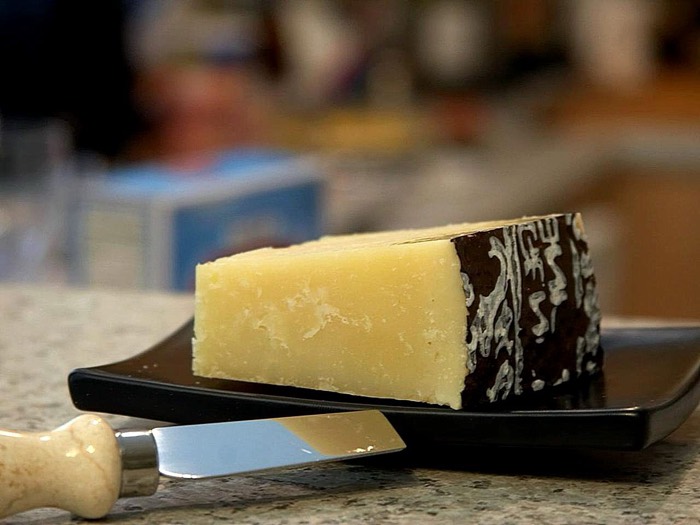
Roman cacio e pepe is Pecorino Romano, black pepper and pasta, bound by an emulsion of cheese and starchy pasta water — no cream, butter or oil. At Il Matriciano, Rua de São Bento 107, Lisbon, it is Tonnarelli cacio e pepe (€18.00): tonnarelli handmade every morning and Pecorino Romano DOP from Fulvi, in Lazio.
What cacio e pepe is — and what it isn't
The name is the recipe. Cacio is Roman dialect for cheese; pepe is pepper. The dish is aged sheep's-milk cheese, cracked black pepper and pasta, and nothing else.
Read classically, cacio e pepe has no cream, no butter and no Parmesan. The creaminess comes from somewhere less obvious: the starch the pasta releases into its cooking water, which lets the cheese melt into a smooth sauce instead of seizing into clumps.
It is the shortest of the Roman classics, which makes it the most exposed. With two ingredients there is no sauce to hide behind — which is why, as we argue in Fresh Pasta in Lisbon, it is the simplest test of a pasta kitchen.
Why two ingredients take so much work
The difficulty is temperature. Pecorino Romano is a hard, salted, aged cheese. Too much heat and its proteins tighten and the cheese turns to strings; too little and it never melts. The sauce exists in the narrow band between the two.
That is why cacio e pepe is brought together off the flame, with the pasta water acting as the bridge between cheese and pasta. And it is why the cream versions exist: cream makes the technique unnecessary. What you get is a different dish — heavier, sweeter, and without the sharp sheep's-milk-and-pepper taste that defines the original. The same thing happens to carbonara, as we explain in Why Real Carbonara Doesn't Have Cream.
The shape: tonnarelli
In Rome, cacio e pepe is very often made with tonnarelli — a fresh pasta cut square, like a thick spaghetti with corners. It is the shape Il Matriciano uses too, made by hand every morning before service.
The choice is practical, not decorative. Tonnarelli has a rough, porous surface that holds a cheese emulsion far better than a smooth machine-extruded spaghetti. When the sauce is only cheese and water, the pasta has to do part of the work.
The cheese: Pecorino Romano DOP
Pecorino Romano is a sheep's-milk cheese with Protected Designation of Origin (DOP) status. The one in Il Matriciano's kitchen comes from the Fulvi dairy in Lazio — Rome's own region — a producer recognised by Gambero Rosso. It is the same cheese that goes into the carbonara and finishes the amatriciana.
Parmesan is not a substitute. It is a cow's-milk cheese, sweeter and less salty; with it the plate is pleasant, but it is no longer cacio e pepe.
Is cacio e pepe vegetarian?
It contains no meat — it is the only one of Rome's four classic pastas without guanciale (cured pork cheek). But it is not strictly vegetarian. Pecorino Romano DOP is made with lamb rennet under its production rules, so anyone who avoids animal rennet should know that before ordering.
Where cacio e pepe sits in the Roman family
Rome has four classic pastas, built from the same short pantry: gricia, amatriciana, carbonara and cacio e pepe. The first three carry guanciale; cacio e pepe is the meat-free base the others build on.
Il Matriciano serves three of the four: Tonnarelli all'Amatriciana, Tonnarelli cacio e pepe and Mezze maniche carbonara, all at €18.00. The whole family is set out in The Roman Pasta Tradition.
How to recognise a good cacio e pepe, anywhere
Three things you can check, before and after the plate arrives:
- The menu names the cheese. "Cheese and pepper" is not enough. Pecorino Romano is the right answer, and a kitchen that uses it usually says so.
- The sauce is smooth and clings. No pool of liquid at the bottom of the plate, no lumps of cheese. If it tastes of cream, it has cream in it.
- You can see and taste the pepper. It is half the name of the dish, not a garnish.
What to drink with cacio e pepe
Pecorino and black pepper want a white with real texture; a heavily tannic red will fight the cheese. On Il Matriciano's list, the suggestions at the table are the Fiano or the Greco di Tufo from Feudi di San Gregorio (both €9 by the glass), or the Verdicchio dei Castelli di Jesi from Bucci.
There is also a white called Pecorino: the Pecorino Bio from Masciarelli, in Abruzzo. It is a grape, not the cheese — the name is a coincidence, but it is a good-humoured one to drink alongside the dish. The rest of the pairings are in Italian Wine in Lisbon: What to Drink With Roman Pasta.
Where and when
Il Matriciano — Rua de São Bento 107, 1200-816 Lisbon, directly opposite the Assembleia da República. Monday to Saturday: lunch 12:30–15:00, dinner 19:30–23:00. Closed on Sundays.
Phone: +351 213 952 639 · Email: ilmatriciano.info@gmail.com
Ristorante Il Matriciano — Essential Information
1200-816 Lisbon, Portugal
Dinner 19:30–23:00
Closed Sunday